Assignment 1: Modelling & Laser Cutting 30 Instances of One Unique Part
Phase 1: Ideation & Sketching
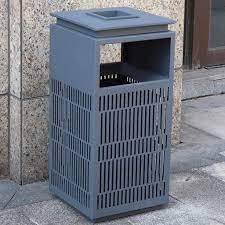
In planning to create this laser cut kit, I wanted to create something I needed and reuse some cardboard boxes I had lying around. I did some initial research on Pinterest and Google to find some inspiration and landed on creating a recycled trash bin from cardboard boxes.
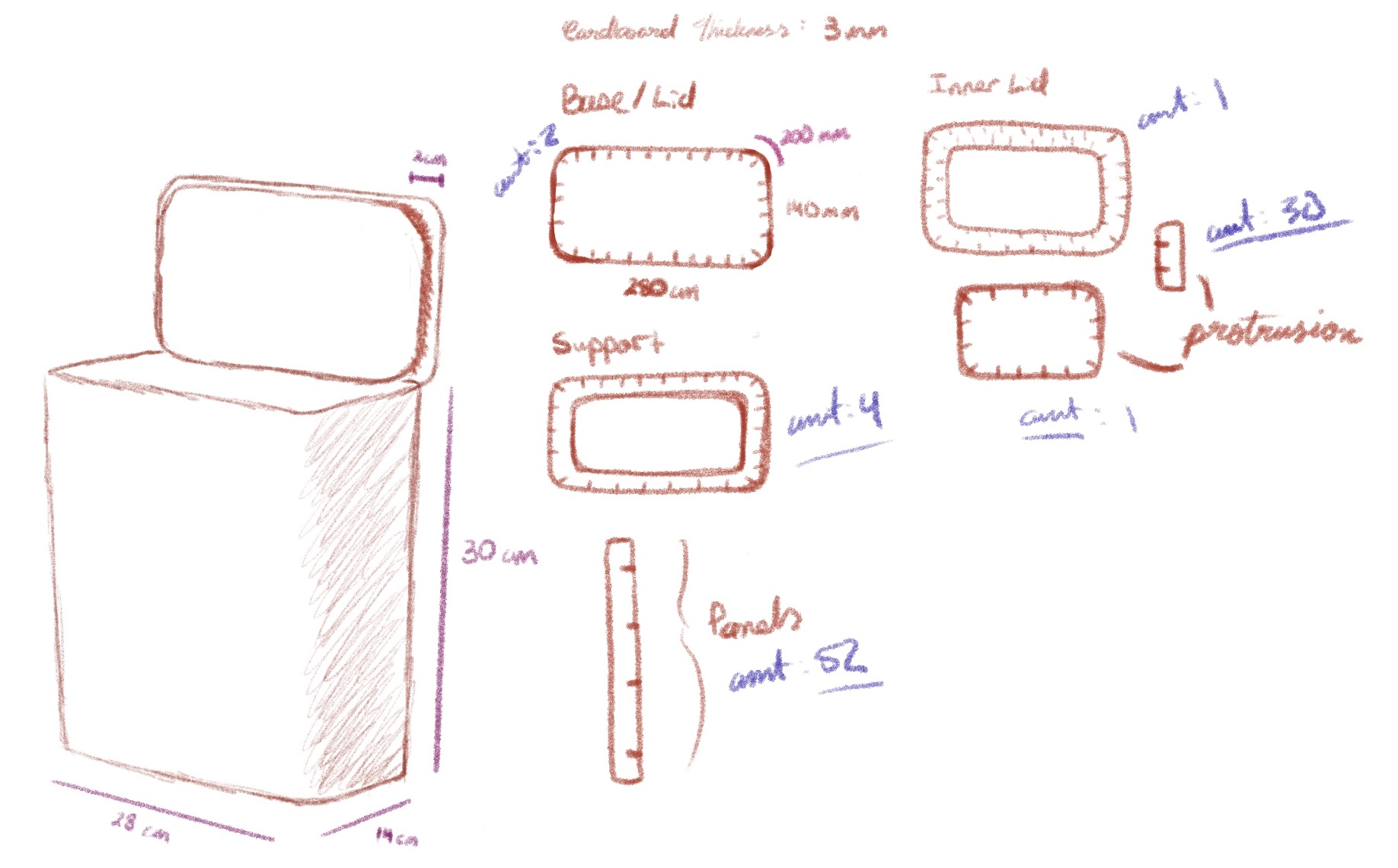
I created a general sketch of the trash can and the general parts I needed to structure the bin and the lid to the bin.
One of my beginning concerns is procuring enough cardboard to create test pieces and the final product itself. I decided to structure my bin to be smaller than I intended to be sure I could create a final product.
Phase 2: Vector Creation
Vector FileFirst Vector Iteration

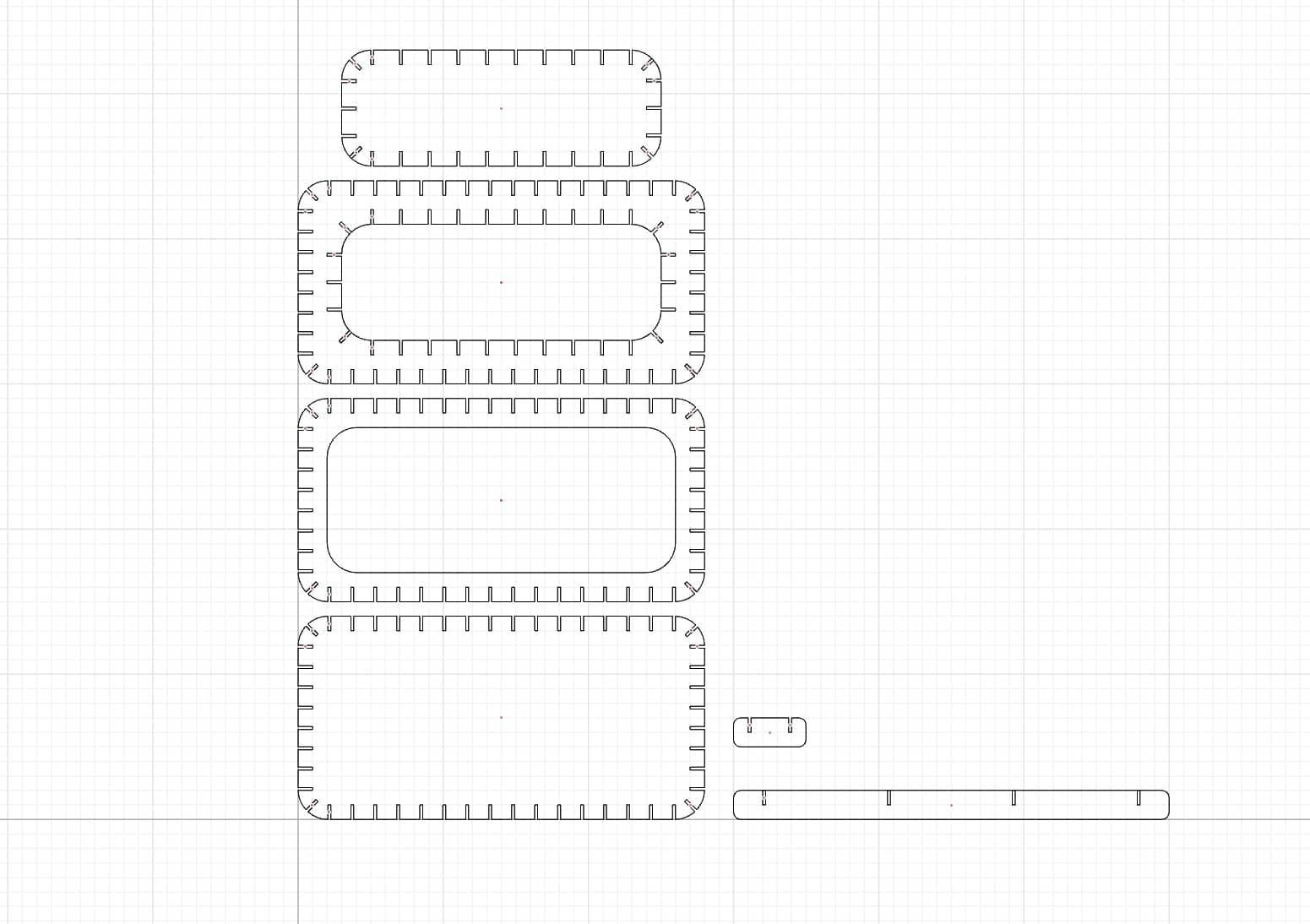
I created a vector in cuttle.xyz with some of the preliminary measurements I made in the sketch. I decided to make the notches 1mm smaller than intended to account for the laser burning off additional material.
One of my concerns with the first iteration are the number of notches I decided to make in the cardboard which may have an impact on the durability and integrity of the cardboard.
I also decided to create a notch sample vector with the two different sized notches in order to help me determine which notch width (1mm or 2mm) would ensure a snug fit.
I was also prepared to reduce the number of notches on the base and supports if the cardboard's integrity/durability was compromised.
Unfortunately, I realized I only had enough material to cut the final base and support pieces. So the notch sample was imperative for me to identify if the cardboard was durable enough to have as many cuts as I had intended it to.
Adobe Illustrator FileCompressed Files
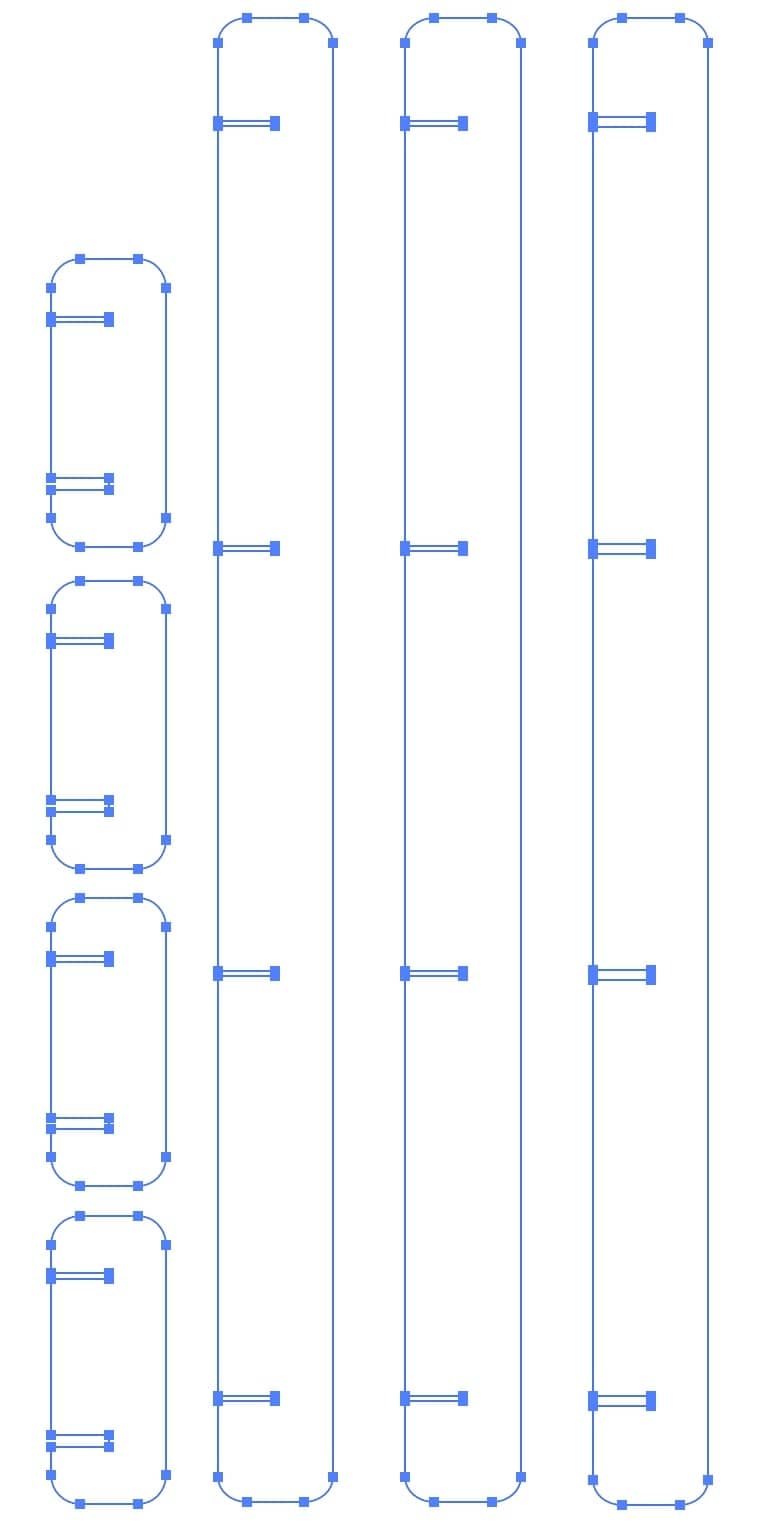
Phase 3: Notch Testing with Samples
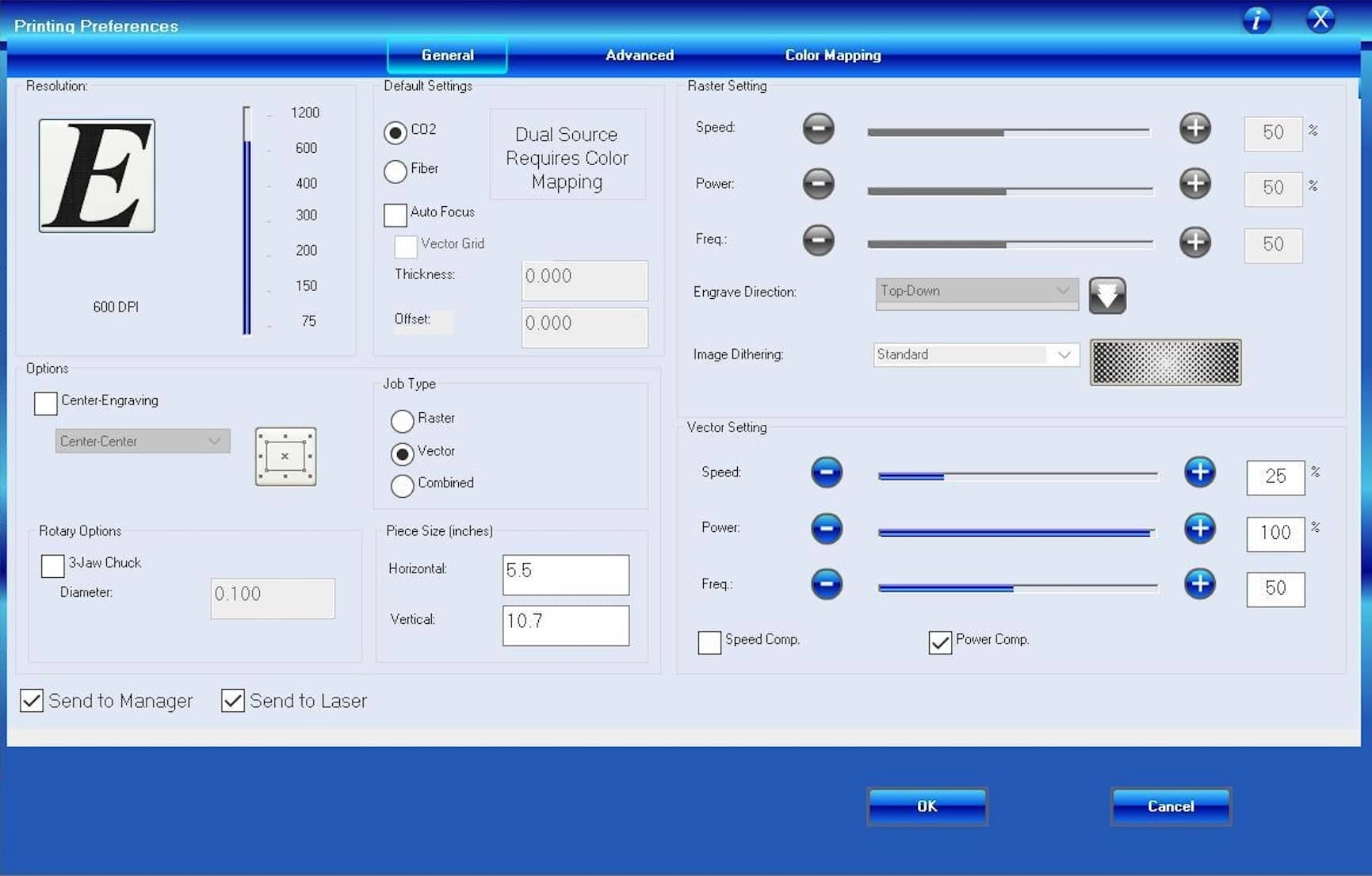
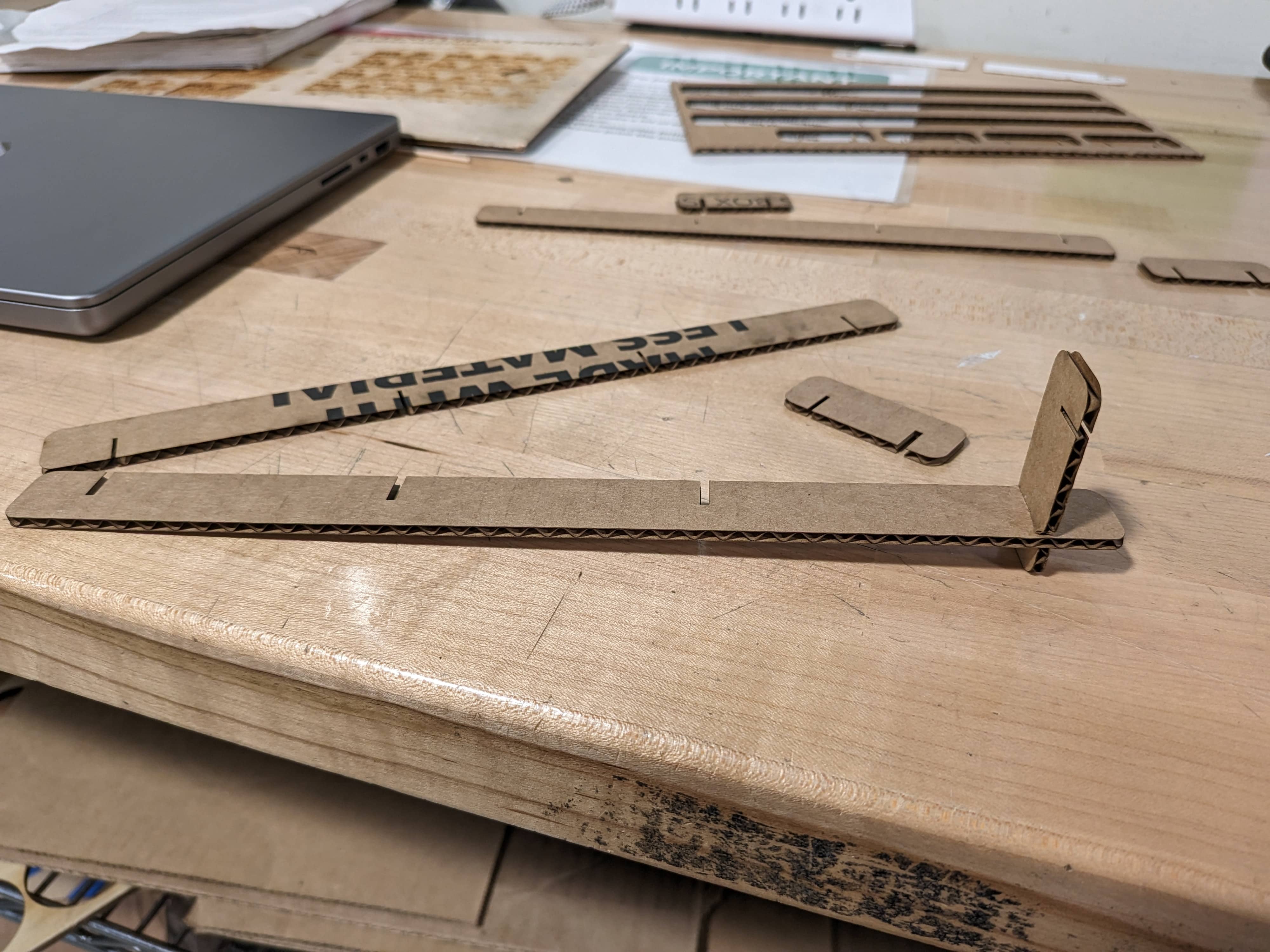
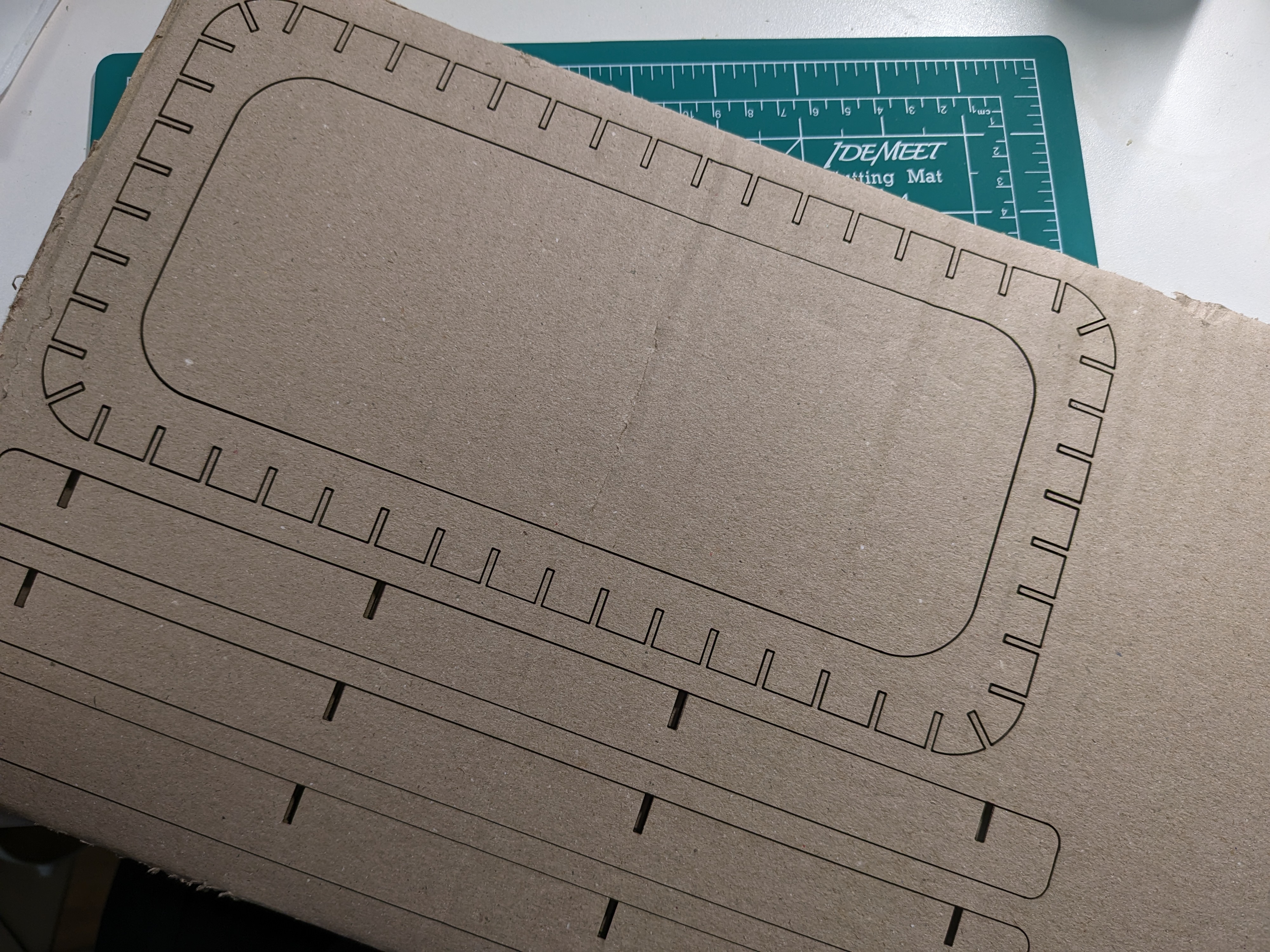
After prepping my material (old Amazon boxes and recycling boxes) and taking note of the sizes of my material, I went to The Mill!
Since I was using different types of cardboard for recycling, it was important for me to print my test pieces and try different settings for each type of cardboard.
I ended up using 25% speed, 100% power, and 50% frequency for my Amazon boxes and 20% speed, 100% power, and 75% frequency for my other cardboard material since it was sturdier.
Phase 4: Cutting & Assembly
I spent the day at The Mill and cut out all of my pieces. I only ended up having enough cardboard for the bin itself and not the lid unfortunately.
One of the things I noticed was how the thickness of my cardboard was not consistent. Therefore some parts were cut cleanly while others were not cut all the way through.
The inconsistency of the cardboard also made the entire assembly process more tedious than it should be! Some pieces fit together perfectly without any issues while others were too thick and required more finesse and force.
Regardless, the whole assembly process was a nightmare. I had cut about 56 total pieces and had slot in the notches so they fit seamlessly within one another. This took me about 3 hours total and by the time I was half way through, I noticed the integrity of the cardboard start to deteriorate.
I also started to cheat a bit and cut out notches for some of the thicker cardboard I was unable to account for. In the future, I should make chamfers in my notches to make the assembly process a whole lot smoother.
Phase 5: Final Product & Reflection
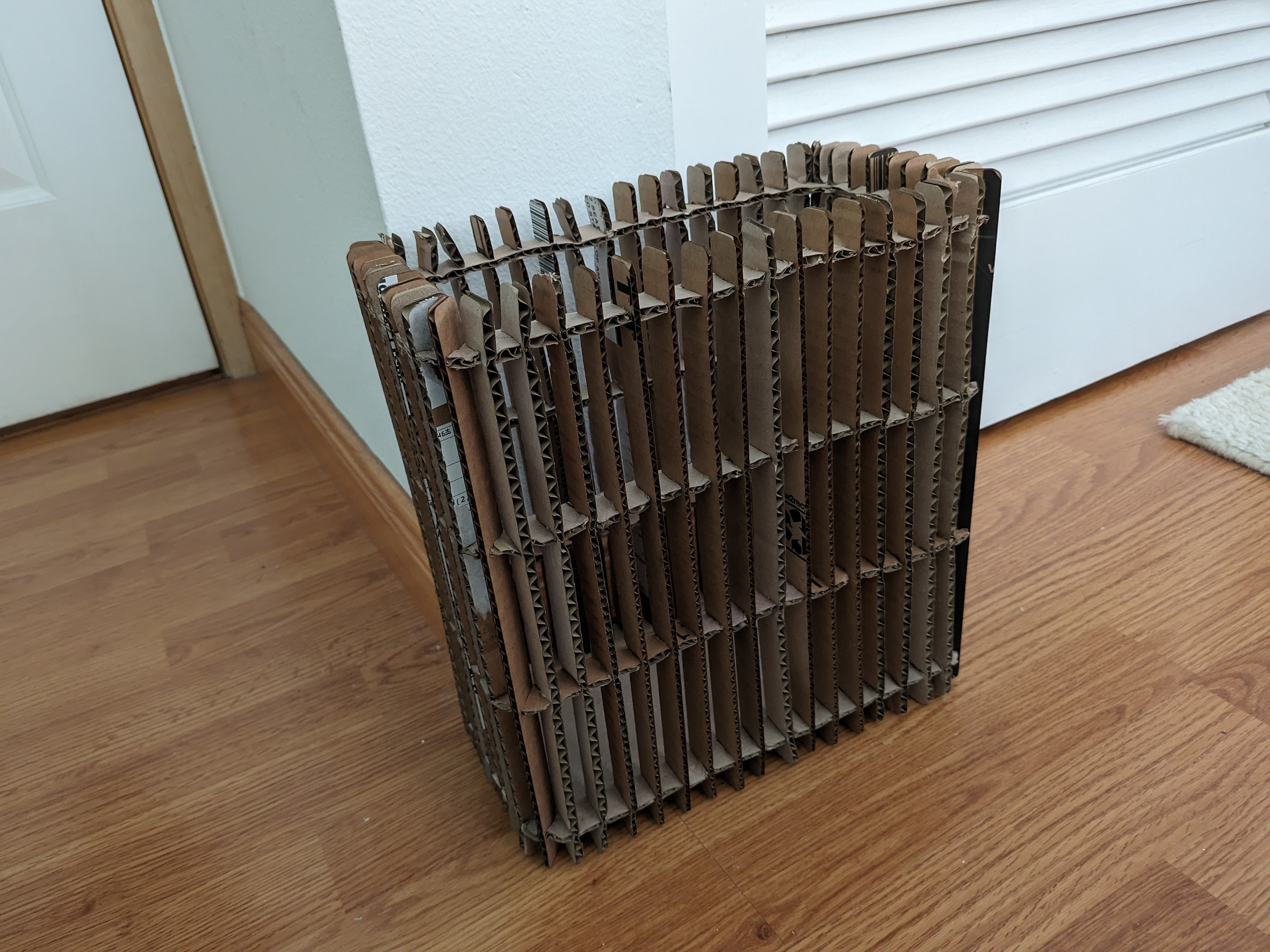
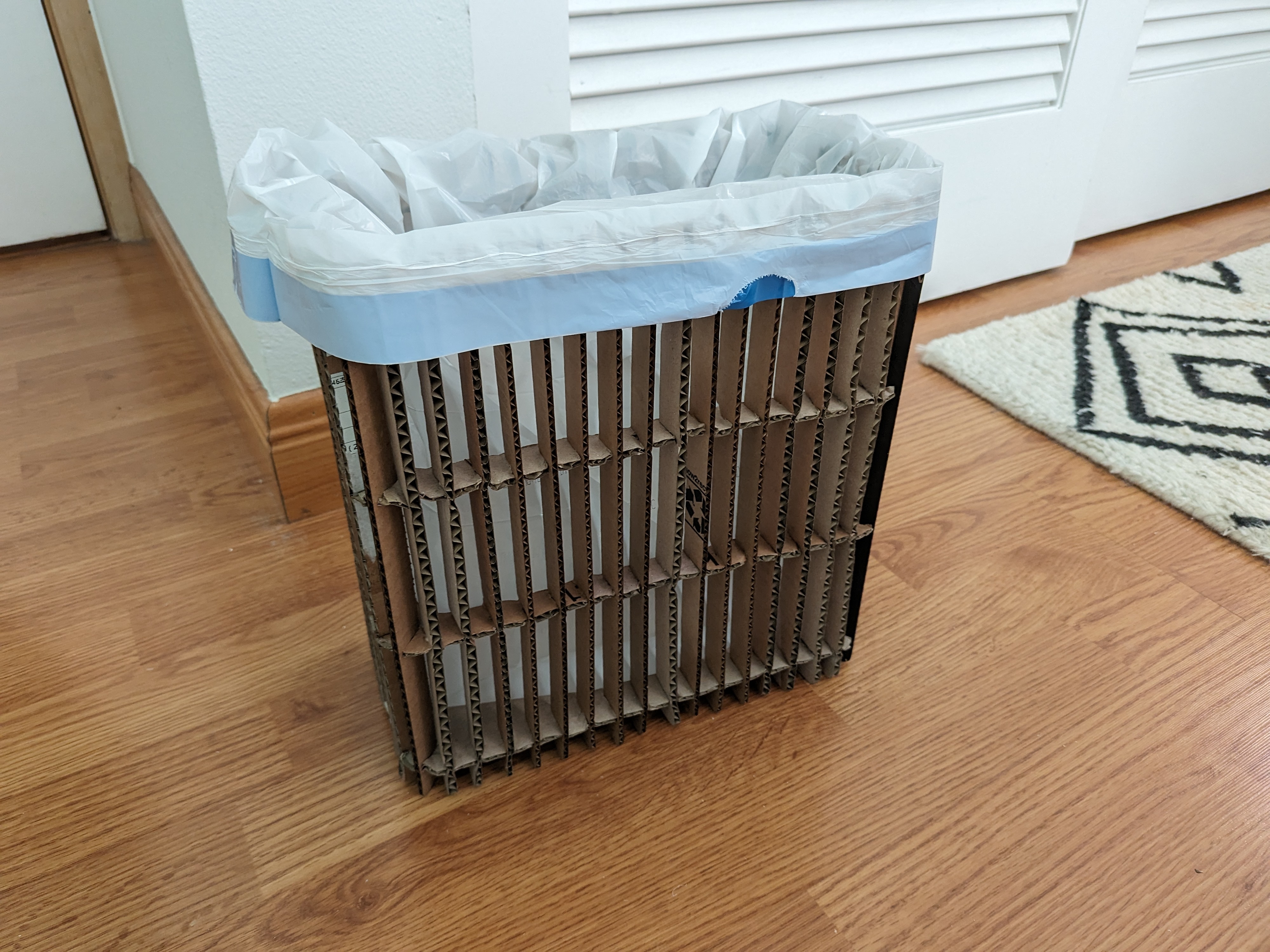
Overall, I learned a lot from this experience on the importance of measuring your materials thoroughly and correctly. If I were to fo this project again, I would reduce the number of parts for assembly and challenge myself to make a more complex figure, since this is essentially a bin made from relatively simple rectangular shapes.
If I had more time and material, I would certainly made the lid I intended for this bin and also re-cut some of the panels and supports since some of the pieces were falling apart by the end of my assembly.
The Final Test...
Surprisingly, it survived the shake test!
However, I am sure that some of the panels are less secure and will fall out if I handle it carelessly.
Overall, I am happy with what I was able to accomplish! I was able to function the laser machine with no issues and learned a lot of the importance of measuring and planning projects for the future. The only problem I still have is the smell of singed cardboard unfortunately!